Cat toys
Cat toys manufactured to your specification
Catnip and plush toys, teaser and chase toys, and interactive or electronic lines, built on the same pile, fleece and filling base as the dog range and cut to shapes a cat carries and bats rather than shakes. Made as OEM runs to your artwork or as ODM adaptations.
Cat toy lines
Three lines, and how far each one is built out
Cat toys divide by how the cat is meant to engage with them, not by material. One of the three lines has its own page; the other two are organised inside the live catalogue while their ranges are being built out.
Catnip and plush
Soft bodies with an attractant fill sealed into an inner pouch, shaped for carrying, kicking and bunny-kicking. This is the line with the widest construction range and the one most cat ranges are built on.
Teaser and chase
Wands, ribbon and feather teasers, and toys on a line, where the play is in the movement rather than the object. The construction problem is the joint and the cord, not the body.
Interactive and electronic
Motion and sound toys where a mechanism sits inside a sealed housing and the cat triggers it. These share their mechanisms and their moulding with the dog interactive range.
Cat lines are quoted on the same terms as dog lines: one minimum order quantity per construction, not one per category, and a sampling date given against the specification you send.
Materials
The same base as the dog plush range
A cat plush toy is built from the same shell fabrics, fill and stitching as a dog plush toy. What changes is the shape, the fill weight and the attractant — so if you already buy dog plush from us, the material conversation for a cat range is mostly already had.
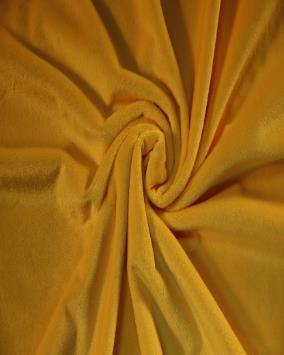
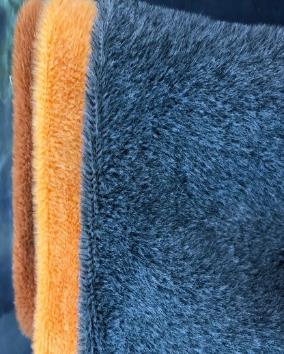
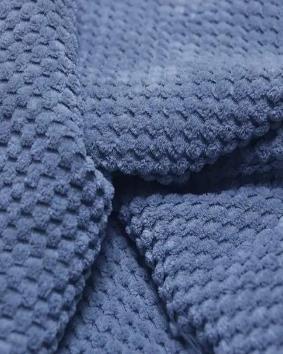
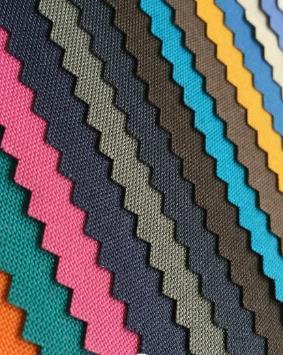
Catnip, silvervine and valerian fills are held as separate line items with their own shelf-life and handling notes. What a finished toy is stuffed with is agreed at sampling, and the outer shell is sealed so the attractant does not migrate into the packaging before the customer opens it.
In production
What the cat range looks like made up
Catalogue photography on this site is weighted towards the dog range, because that is where most of the production photography comes from. The cat lines are made and shipped; if you are specifying one, ask and we will send photographs of the constructions you are considering rather than a representative one.
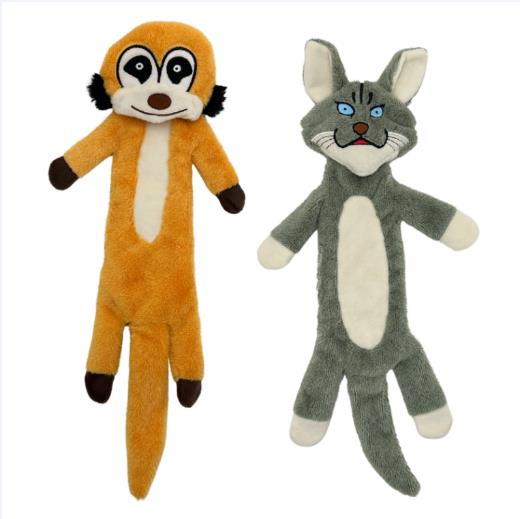
Flat plush body
Two panels, edge-bound, with the face embroidered rather than applied. The shape is cut to be carried and kicked, and holds without fill.
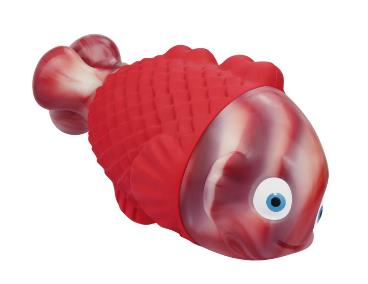
Soft moulded body
A sealed moulded shell with no fill at all. Fish and mouse silhouettes are the shapes this build is normally cut to.
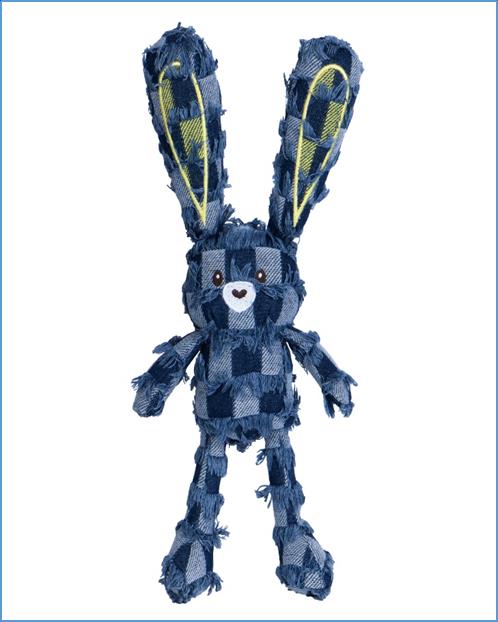
Fringed and feathered ends
Fringing is cut after stitching, so it is a finishing operation. It is what makes a soft body read as a chase toy rather than a comfort toy.
Moulded housings
Electronic cat lines share the moulding stock and the sealing spec with the dog interactive range. The housing and the mechanism are specified together.
Specification
What a cat toy specification has to state
The fields are close to the dog range with two additions — the attractant and the shape family. Both are agreed before sampling, because both are difficult to change afterwards.
Line and shape family
Which of the three lines, and whether the shape is a soft body, a flat body, a wand attachment or a moulded part. Shape family decides the construction before any material is chosen.
Attractant
Catnip, silvervine, valerian, or none. How it is held — loose in the body, sealed in an inner pouch, or as a refillable compartment — changes the pattern, not just the filling line.
Size and fill weight
Finished size, and fill weight per unit where the toy has fill. A cat body is normally much lighter than a dog body of the same dimensions, and the fill spec is where that is set.
Attachments
Cords, ribbons, feathers, bells and wand fittings. Any attachment a cat can reach has to be specified with its pull limit, because that is the part that gets swallowed.
Branding
Woven labels, embroidered logos and printed tags. Applied plastic parts are avoided on cat lines too, for the same reason as on chew builds — they are what comes away.
Packaging and destination
Header card or blister, polybag, carton count and shipping marks, plus the destination market. Attractant-filled products can carry handling and labelling requirements that vary by market.
What buyers ask about this range
Start a cat toy range from a line
Tell us the line, the shape family, the attractant if there is one, and the destination market. You will get the applicable minimum order quantity, the sampling date and the compliance file set in the same reply. Related reading: catnip and plush constructions and the buying guides.